Effective Event Marketing Funnel
Learn how to build an effective event marketing funnel that maximizes attendance and engagement through an integrated, strategic workflow for better results.
Problem overview
Event organizers and marketing teams consistently face the challenge of maximizing both attendance and engagement for their events. Despite significant investments in promotion, many find that either attendance numbers fall short or participants remain passive. This problem is compounded by the complexity of attendee journeys and the increasing competition for audience attention. Businesses rely heavily on events to build relationships, generate leads, and deliver brand experiences, yet often struggle to connect their marketing efforts into a fluid process that drives strong, measurable results.
Why traditional tools fail
Conventional approaches to event marketing typically involve disjointed tools and manual processes—spreadsheets for tracking invites, separate email systems for outreach, and social media managed independently. These fragmented methods create inefficiencies, such as inconsistent messaging and missed engagement opportunities. Moreover, many tools focus solely on registration numbers without the capacity to nurture attendees' interest or gather meaningful interaction data. Without a unified system, teams cannot visualize or optimize the funnel stages from awareness through to post-event follow-up, limiting their ability to refine strategies or personalize outreach.
Smarter approach / workflow
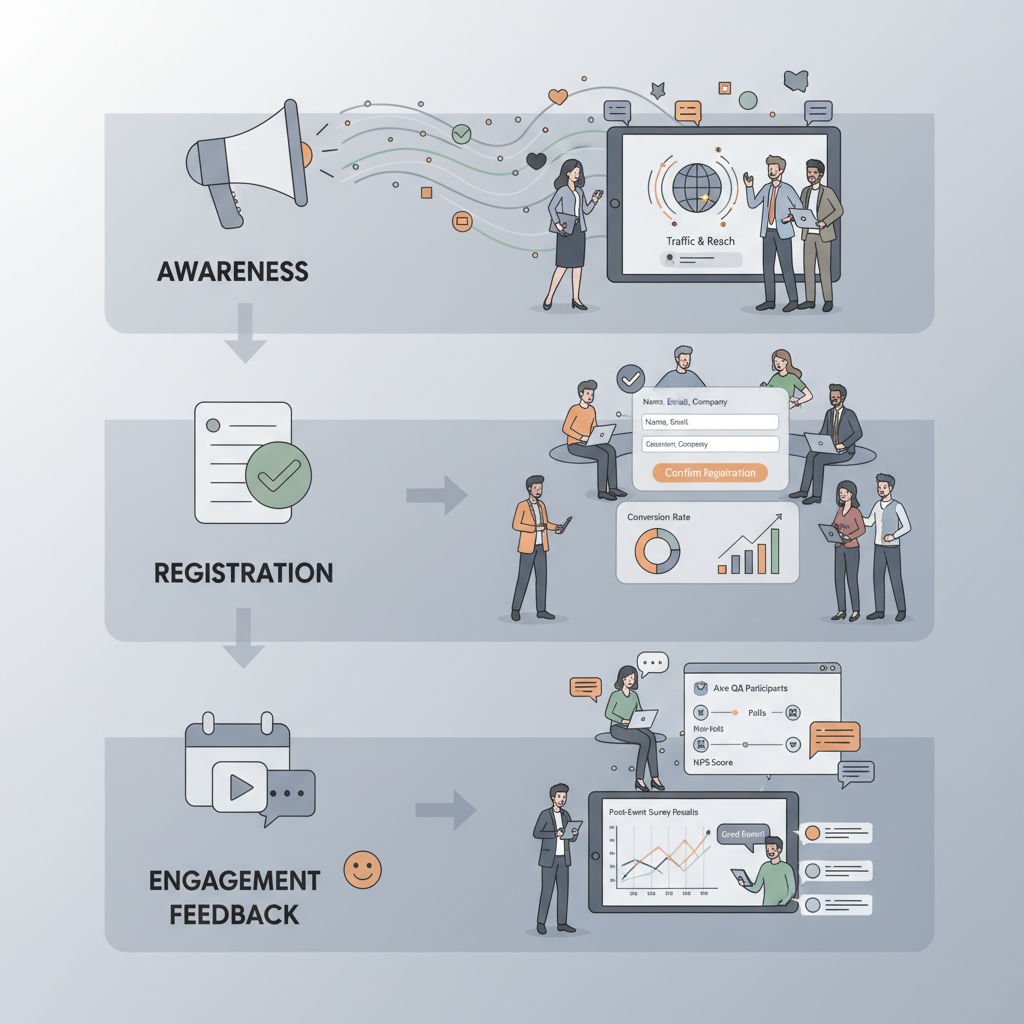
A more effective event marketing funnel integrates the entire attendee journey into one seamless workflow. This includes capturing prospects' attention with targeted campaigns, guiding them through registration with clear, value-driven communication, and maintaining engagement with timely reminders and relevant content. Post-event engagement is equally crucial, allowing for feedback collection and continued relationship building. A centralized platform that ties marketing, registration, communication, and analytics together empowers teams to orchestrate and optimize each stage with data-backed insights.
How this works in practice
Consider a mid-sized company planning a product launch webinar. Instead of isolated outreach efforts, the marketing team uses a unified platform where they create segmented audience lists based on previous customer behavior. They launch tailored email campaigns that not only invite recipients but also nurture interest through educational content. Registrations are automatically tracked, triggering personalized follow-ups reminding attendees of the event and sharing preparatory materials. During the event, engagement tools such as polls and Q&A sessions collect live feedback. Afterward, the platform consolidates data to analyze attendance trends and participant interaction, guiding future campaign adjustments to increase effectiveness.
Key takeaways
Building an effective event marketing funnel hinges on integrating each phase of the attendee journey within a single strategic workflow. Traditional tools often fail because they separate outreach, registration, and engagement into siloed efforts that miss critical data and touchpoints. A smarter approach leverages a unified platform to automate communication, personalize messaging, and analyze behavior, ensuring maximum attendance and sustained engagement — everything an event professional needs to succeed. How can your current event marketing process better align outreach, registration, and engagement to create a seamless experience that maximizes impact? Let's discuss how integrating these steps can transform your results.